Hello FlutterFlow Community and Team,
FlutterFlow has evolved into a powerful platform for building production-grade applications, including offline-first and local-first architectures powered by technologies such as SQLite, PowerSync, and Supabase.
However, based on recent reproduction tests, there appear to be dependency resolution constraints within the FlutterFlow Cloud Builder that currently prevent adoption of certain modern SDK versions and contribute to web build compatibility issues.
We are currently hitting two separate but deeply interrelated constraints within the managed Cloud Builder ecosystem:
Flagship infrastructure packages have recently rolled out major upgrades (such as the Dart/Flutter SDK v2.x ecosystem). These updates introduce vital performance leaps, native encryption, and stabilized connection layers.
However, adoption within FlutterFlow is blocked. For example, PowerSync v2.x requires newer versions of core foundational dependencies (such as updated http package releases) than those globally pinned within the Cloud Builder environment.
Exporting the codebase to a local environment (e.g., VS Code) and manually bumping the foundational versions resolves the mismatch, allowing the modern SDK to compile cleanly. Within the cloud builder, this version resolution is not currently possible, preventing upgrades entirely.
When reverting to an older SDK version that fits within FlutterFlow's global dependency locks, the application architecture demonstrates partial success but breaks down on targeted web compilation.
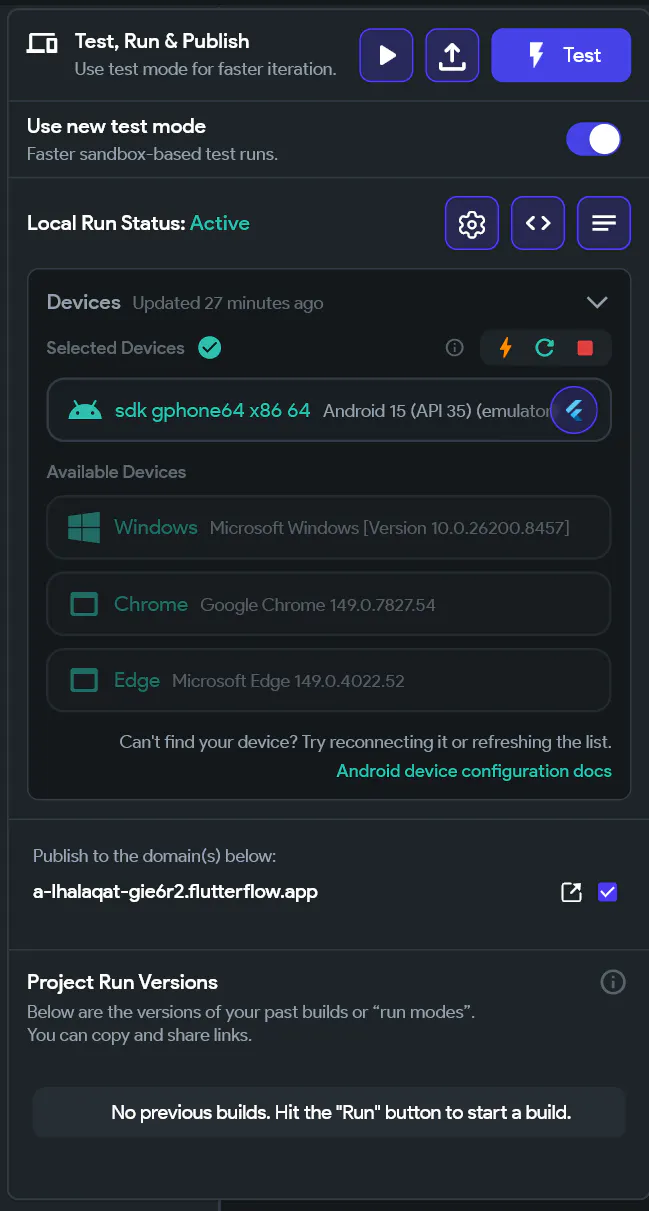
🟢 Android Local Run (Successful): The application compiles and operates flawlessly on FlutterFlow's cloud Android emulator (Local Run Status: Active), proving that the database schema, sync architecture, and custom code are structurally valid.
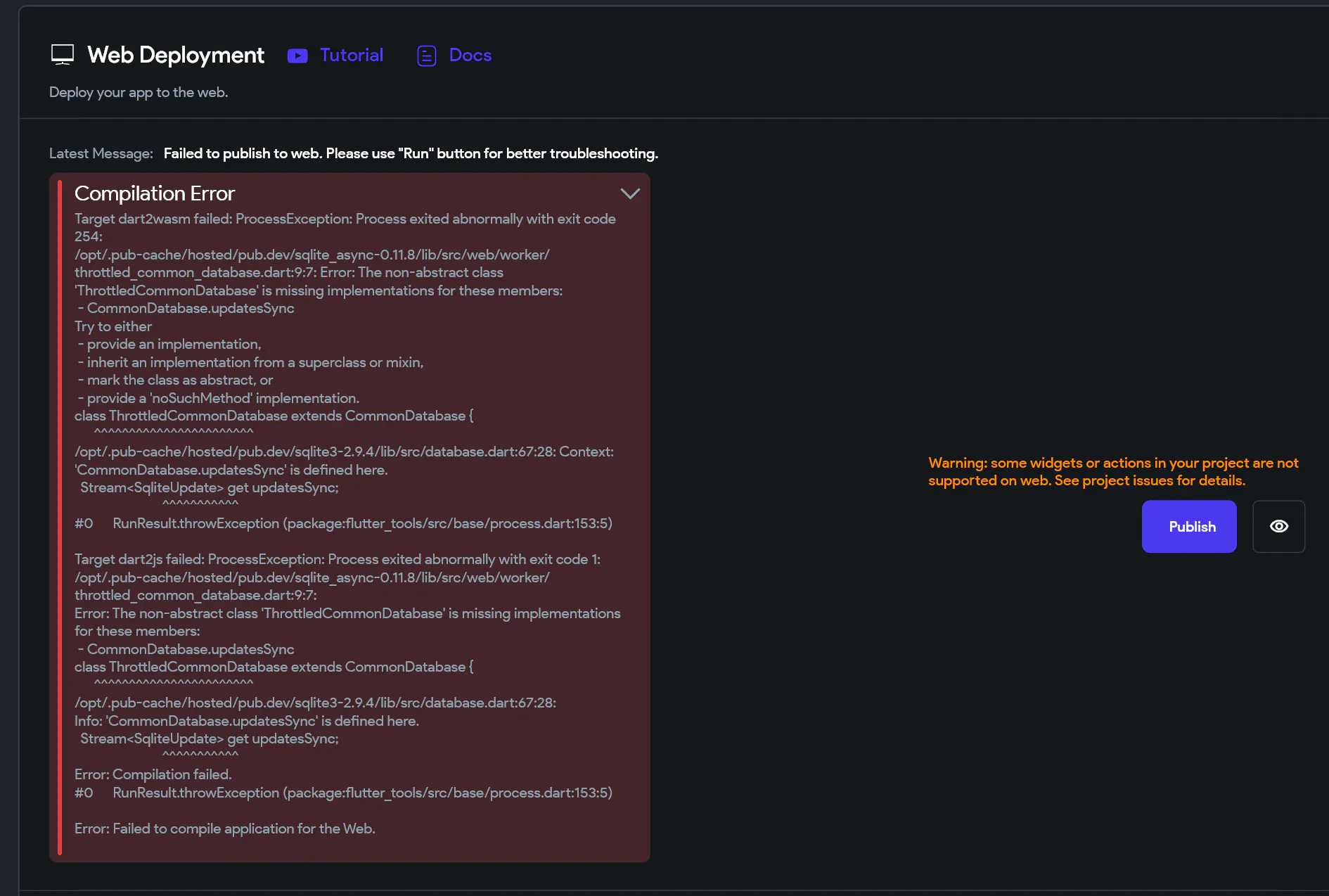
🔴 Web Deployment (Fails Consistently): Triggering a Web Deployment or Cloud Web Build consistently results in dependency-related build failures.